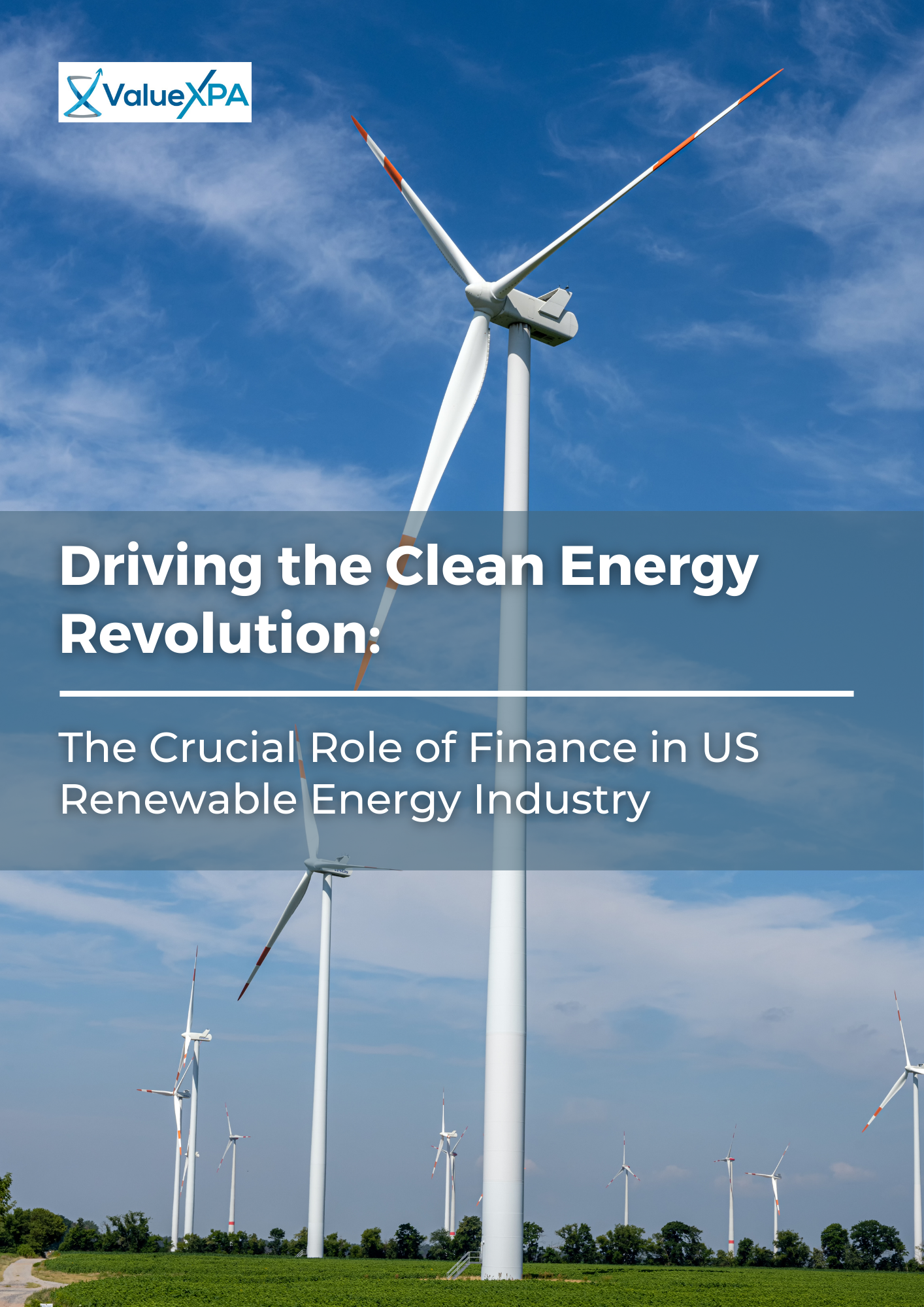
Driving the Clean Energy Revolution: The Crucial Role of Finance in US Renewable Energy Industry
In recent years, the US has witnessed a surge in renewable energy investments, reaching a record high of USD 1.3 trillion in 2022 (IRENA, 2023). This growth is
In recent years, the US has witnessed a surge in renewable energy investments, reaching a record high of USD 1.3 trillion in 2022 (IRENA, 2023). This growth is fueled by a combination of factors, including favorable government policies, increased awareness of the environmental benefits of clean energy, and the growing interest in the energy transition. As a result, renewable energy has become an attractive investment opportunity for both public and private sector investors, who are increasingly recognizing the potential for long-term returns and positive environmental impact.
- The US renewable energy industry has seen significant growth due to falling costs and market expansion, with ambitious targets for solar and wind adoption.
- Government policies like tax credits and incentives have played a pivotal role in promoting renewable energy investment.
- Private sector investment, including from financial institutions, has surged, driven by potential returns and environmental benefits.
- Financial analysis and evaluation, power purchase agreements, tax equity financing, and risk mitigation strategies are key financial drivers in the renewable energy sector.
Financial Drivers of Renewable Energy Adoption

A. Falling Costs and Market Growth
The renewable energy sector in the US has been experiencing significant growth in recent years. According to the U.S. Energy Information Administration, renewable energy accounted for 21.5% of the total electricity generation in the country in 2022. This growth has been largely driven by the increasing adoption of solar and wind energy, which has seen a significant increase in capacity. According to the U.S. Energy Information Administration (EIA), developers have set a target of adding 29.1 GW of solar generating capacity to the U.S. grid in 2023, which represents 54% of the planned new capacity for the year. Furthermore, the report predicts a 5% increase in U.S. wind capacity over the next two years, with an addition of 6 GW in 2023 and 7 GW in 2024.One of the key factors driving this growth is the falling costs of renewable energy technologies. The International Renewable Energy Agency has reported that the global weighted average cost of electricity from Solar Photovoltaic could fall by as much as 59%, and from Concentrated Solar Power (CSP) by up to 43% by 2025. This has made renewable energy source increasingly cost competitive with traditional energy sources, making it an attractive option for businesses and consumers alike.
Looking ahead, the US has set ambitious targets for renewable energy adoption. According to the EIA's Solar Futures Study, the country aims to achieve 40% of its electricity from solar energy by 2035. This will require continued investment in renewable energy infrastructure and technology, as well as ongoing efforts to drive down costs and increase efficiency.
B. Government Support and Policies
The US government has implemented various financial incentives, tax credits, grants, and subsidies at federal, state, and local levels to promote renewable energy investment and reduce project costs. These policies have played a crucial role in driving the growth of renewable energy across the country.Federal Incentives:
- Investment Tax Credit (ITC): - Businesses can deduct a percentage of their solar installation costs from federal taxes. - ITC offers a tax credit of up to 30% of the cost of a renewable energy system.
- Production Tax Credit (PTC): - Provides a per-kilowatthour credit for electricity generated by renewable energy systems. - PTC offers a corporate tax credit of up to 1.3 cents/kWh for qualified renewable energy resources.
State-Level Policies
- Renewable Portfolio Standards (RPS) require energy utilities to source a specific percentage of electricity from renewable sources.
Inflation Reduction Act of 2022
- Introduces wage and apprenticeship requirements for renewable energy systems over 1 MW in size.
- Eligibility for projects less than 1 MW: Construction begins after December 31, 2021, and before January 1, 2025.
- Projects above 1 MW: Construction can begin on or after January 30, 2023, according to the United States Environmental Protection Agency.
- The government support and policies outlined above have played a pivotal role in facilitating renewable energy growth by making projects more affordable, encouraging investment, promoting job creation, and ensuring environmental benefits. These initiatives demonstrate the commitment of the US government to advancing a sustainable and clean energy future.
.png)
Attracting Investment in Renewable Energy Projects
Private Sector Investments
The renewable energy sector in the US has been experiencing a surge in private sector investments, as institutional investors, pension funds, and private equity firms recognize the long-term potential and environmental benefits of renewable energy. The head of power markets for SB Energy, a subsidiary of SoftBank Group, reported a record-breaking milestone in private investment for renewable energy projects, with an unprecedented amount exceeding $10 billion allocated towards the advancement of renewable energy initiatives. Deloitte forecasts that these investment levels will continue into 2023, as investors are attracted by transparent and predictable returns on mature technologies backed by the IRA's 10-year tax credits.
Financial institutions have been playing a crucial role in supporting the renewable energy sector by providing project financing, debt, and equity investments. This support has facilitated the development and construction of renewable energy projects, making them more attractive to investors. With financial institutions playing a crucial role in supporting the sector, SMBs can access project financing, debt, and equity investments that enable them to develop and construct renewable energy projects.
Financial Analysis and Evaluation
The renewable energy sector in the US is rapidly expanding, with global renewable energy capacity increasing by 10.3% in 2021, reaching 2,799 GW, according to the International Renewable Energy Agency (IRENA). To adopt to this change, organizations must develop advanced financial models that accurately analyse the costs & impacts of renewable energy projects. Mastering carbon accounting methodologies, such as ISO 14040, allows organizations to assess the environmental impact of their projects, while discounted cash flow (DCF) analysis and net present value (NPV) calculations provide a comprehensive understanding of cash flows, return on investment, & payback periods. By fostering collaboration between financial analysts and environmental specialists, organizations can create a holistic approach to evaluating renewable energy investments.
Renewable Energy Projects Financial Drivers
Power Purchase Agreements (PPAs)
PPAs play a crucial role in the renewable energy sector by securing long-term contracts for the sale of clean energy at predetermined prices. This revenue stability reduces project risks and attracts investment. In the US Businesses purchased a staggering amount of clean energy source in 2022— nearly 20 gigawatts (GW). Despite the rise in power purchase agreement (PPA) rates, this amount exceeded any prior year's purchase by over 4 GW as reported by American Clean Power Association.Tax Equity Financing
Tax equity financing enables investors to monetize tax incentives like the Investment Tax Credit (ITC) and Production Tax Credit (PTC), driving investment in renewable energy projects. The ITC, for example, offers a 26% tax credit for solar projects that begin construction in 2022 and 2023 as stated by U.S. Department of Energy. These incentives play a significant role in promoting renewable energy development and attracting private investment. This access to capital not only reduces the financial barriers for emerging players but also allows them to participate in the growing renewable energy market and contribute to sustainability goals.Risk Mitigation and Insurance
Insurance products play a vital role in mitigating risks and providing financial responsibility protection for renewable energy project stakeholders. Performance guarantees, construction all-risk insurance, and weather risk coverage are examples of specialized insurance products tailored to address unique challenges in the sector. The global renewable energy insurance market is expected to grow at a CAGR of 8.3% from 2021 to 2028, reflecting the increasing demand for risk management solutions in this industry according to research by Mordor Intelligence. These insurance products and risk assessment strategies are essential for safeguarding the financial viability of renewable energy projects and promoting sustainable growth. By accessing specialized insurance products, SMBs in the renewable energy sector can navigate uncertainties and protect their investments.
Impact of Policy and Regulation
Stable and supportive regulatory frameworks are essential for providing long-term visibility and certainty for investors in the renewable energy sector. In the US, policies such as the Infrastructure Investment and Jobs Act (IIJA) and the Inflation Reduction Act (IRA) have been introduced to offer financial incentives and support mechanisms that accelerate renewable energy deployment.
The IRA is a major step forward for the renewable energy sector. The law provides significant financial support for renewable energy projects, investments in R&D, and support for domestic manufacturing. These measures will help to accelerate the growth of the renewable energy sector and make it a more competitive source of energy.
In addition to the above, the IRA also includes several other provisions that are beneficial to the renewable energy sector, such as:
Requiring utilities to purchase a certain percentage of their electricity from renewable sources: This provision will help to create a market for renewable energy and ensure that there is a demand for renewable energy projects.
Providing grants and loans to help communities develop renewable energy projects: This provision will help to make renewable energy more accessible to communities that may not have the resources to develop their own projects.
Establishing a renewable energy research and development fund: This fund will support research into new and emerging renewable energy technologies.
The Inflation Reduction Act, for instance, has recently approved the extension of tax credits for wind and solar projects, applicable to those commencing construction prior to 2025. Furthermore, the IRA has introduced technology-neutral credits that will remain in effect until at least 2032. Deloitte estimates that this legislation will stimulate the development of approximately 525 to 550 gigawatts (GW) of new clean power from utility-scale sources in the United States by 2030. This support encourages technological advancements and fosters a culture of innovation within the renewable energy sector, enabling small businesses to stay competitive and contribute to the overall industry growth.
The IRA is a major step forward for the renewable energy sector. The law provides significant financial support for renewable energy projects, investments in R&D, and support for domestic manufacturing. These measures will help to accelerate the growth of the renewable energy sector and make it a more competitive source of energy.
In addition to the above, the IRA also includes several other provisions that are beneficial to the renewable energy sector, such as:
The Inflation Reduction Act, for instance, has recently approved the extension of tax credits for wind and solar projects, applicable to those commencing construction prior to 2025. Furthermore, the IRA has introduced technology-neutral credits that will remain in effect until at least 2032. Deloitte estimates that this legislation will stimulate the development of approximately 525 to 550 gigawatts (GW) of new clean power from utility-scale sources in the United States by 2030. This support encourages technological advancements and fosters a culture of innovation within the renewable energy sector, enabling small businesses to stay competitive and contribute to the overall industry growth.
In Summary
Financing the future of renewable energy in the US is crucial for driving growth and development in the sector. The decreasing costs of renewable technologies, coupled with financial incentives and innovative financing options, have made this sector increasingly attractive to investors. Financial engineering of tax credits, carbon accounting, analysis techniques, risk mitigation strategies, and supportive policies act as enablers to tap into the opportunities presented by IRA. and help accelerate the deployment of clean energy technologies nationwide.
Building a strong network of industry experts and partners is essential for small and medium sized businesses (SMBs) in the renewable energy sector. By establishing relationships with renewable energy experts, finance specialists with clean energy focus, and other industry stakeholders, SMBs can gain valuable insights and support as they navigate the complex financial landscape . This collaborative approach fosters innovation, facilitates the flow of capital, and ensures that businesses are well-equipped to adapt to market changes and capitalize on emerging opportunities in the renewable energy sector.
Building a strong network of industry experts and partners is essential for small and medium sized businesses (SMBs) in the renewable energy sector. By establishing relationships with renewable energy experts, finance specialists with clean energy focus, and other industry stakeholders, SMBs can gain valuable insights and support as they navigate the complex financial landscape . This collaborative approach fosters innovation, facilitates the flow of capital, and ensures that businesses are well-equipped to adapt to market changes and capitalize on emerging opportunities in the renewable energy sector.