SaaS Finance a complete CEO handbook
In recent years there has been a surge in the SaaS economy. Customers are increasingly adopting the subscription-based pricing model to satisfy growing IT needs
In recent years there has been a surge in the SaaS economy. Customers are increasingly adopting the subscription-based pricing model to satisfy growing IT needs—despite limited IT budgets particularly for SMBs and startups. According to Gartner, the Global SaaS industry is forecast to grow to $195bn in 2023 from $167bn in 2022.
In all this expansion, one major challenge remains, that is how software providers manage their business processes and capture, share, and use financial metrics. When developing a SaaS business, many companies utilize spreadsheets, disconnected systems, and other manual processes to manage their business. These companies also tend to take the same methods and principles used to maintain a traditional software business and implement them in the SaaS business. The result is sub-optimal and does not accurately offer insights into the state of the business. Considering all this, one question pops up, that is - when should a SaaS business start worrying about a robust financial and accounting system? At an early stage, or when they grow into an SMB, or as an enterprise business? The answer is, from the absolute beginning. No matter what stage a business is in, it has to keep track of the cash inflows and outflows. That makes accounting essential.
The most basic needs are clerical and can be met with technical training, but the more advanced needs to understand the business deeply, add a strategic component that is best met by specialists with extensive business experience. It first requires understanding which roles, needs, and paths the business is likely to encounter. Eventually, most successful businesses will outgrow their initial accounting staff and need greater depth as the number of dimensions in the financial function increase.
If they understand what their eventual needs will be in advance, there are many ways that businesses can take risks and get what they need, when they need it, without financially overcommitting. Developments in collaborative technology tools has made it easier for businesses to hold off on hiring full-time finance resources while still having access to a worldwide pool of highly talented individuals. Businesses can now engage fractional CFO’s and advisory Boards and get around to hiring a full-time CFO later, while still meeting their needs for more sophisticated financial leadership.
In all this expansion, one major challenge remains, that is how software providers manage their business processes and capture, share, and use financial metrics. When developing a SaaS business, many companies utilize spreadsheets, disconnected systems, and other manual processes to manage their business. These companies also tend to take the same methods and principles used to maintain a traditional software business and implement them in the SaaS business. The result is sub-optimal and does not accurately offer insights into the state of the business. Considering all this, one question pops up, that is - when should a SaaS business start worrying about a robust financial and accounting system? At an early stage, or when they grow into an SMB, or as an enterprise business? The answer is, from the absolute beginning. No matter what stage a business is in, it has to keep track of the cash inflows and outflows. That makes accounting essential.
The most basic needs are clerical and can be met with technical training, but the more advanced needs to understand the business deeply, add a strategic component that is best met by specialists with extensive business experience. It first requires understanding which roles, needs, and paths the business is likely to encounter. Eventually, most successful businesses will outgrow their initial accounting staff and need greater depth as the number of dimensions in the financial function increase.
If they understand what their eventual needs will be in advance, there are many ways that businesses can take risks and get what they need, when they need it, without financially overcommitting. Developments in collaborative technology tools has made it easier for businesses to hold off on hiring full-time finance resources while still having access to a worldwide pool of highly talented individuals. Businesses can now engage fractional CFO’s and advisory Boards and get around to hiring a full-time CFO later, while still meeting their needs for more sophisticated financial leadership.
Three broad categorization of the finance and accounting function in an organization:
- Strategic Finance
- Tactical Finance
- Operational Finance
Strategic Finance
Strategic finance typically focuses on driving organizational change, which is why it is required to focus on multiple aspects of the business (rather than just a single area). Such strategic thinking is often complex and involves understanding the delicate relationship between the organization and its surroundings in order to offer strategic financial solutions.
 Strategic CFOs can provide insights that can drive positive changes within the organization and create a comprehensive financial plan. They also understand the business’s financial operations, but their objectives are different from the operational CFOs’s. When developing their strategies, there is uniquely distinct CFO responsibility for example a strategic CFO needs to be forward-thinking, while an operational CFO is concerned with past and present financial analysis. Listed below are the tools that every SaaS business must have:
It is common for startups to struggle with the report they want to present to the investors. They lack the necessary experience to know exactly what the investors look for. Oftentimes in SaaS industry some key qualitative narratives such as competitive advantages, target customers and unique selling points are missed and there is a poor understanding about the important SaaS metrics that the investors favor.
An investor Executive Summary Report of your business needs to be strategic with the financial and operational trends that are to be shared with the investors and accurate- hitting the right notes that investors look for.
In today’s rapidly changing world, it is challenging for businesses to plan for tomorrow. And, lack of planning can have its own detrimental effects. To prevent this and to be future-proof, businesses must test out all the possible scenarios and equip themselves with the necessary tools. It starts with understanding your business well, such as understanding how different prices affect your ARR growth, will you be able to cover operating expenses in case of delay in raising funds, what does product development entail in terms of increasing team size and much more. Gaining a perspective on these things, gives you an understanding of how your business is likely to perform in stressed and unforeseen scenarios.
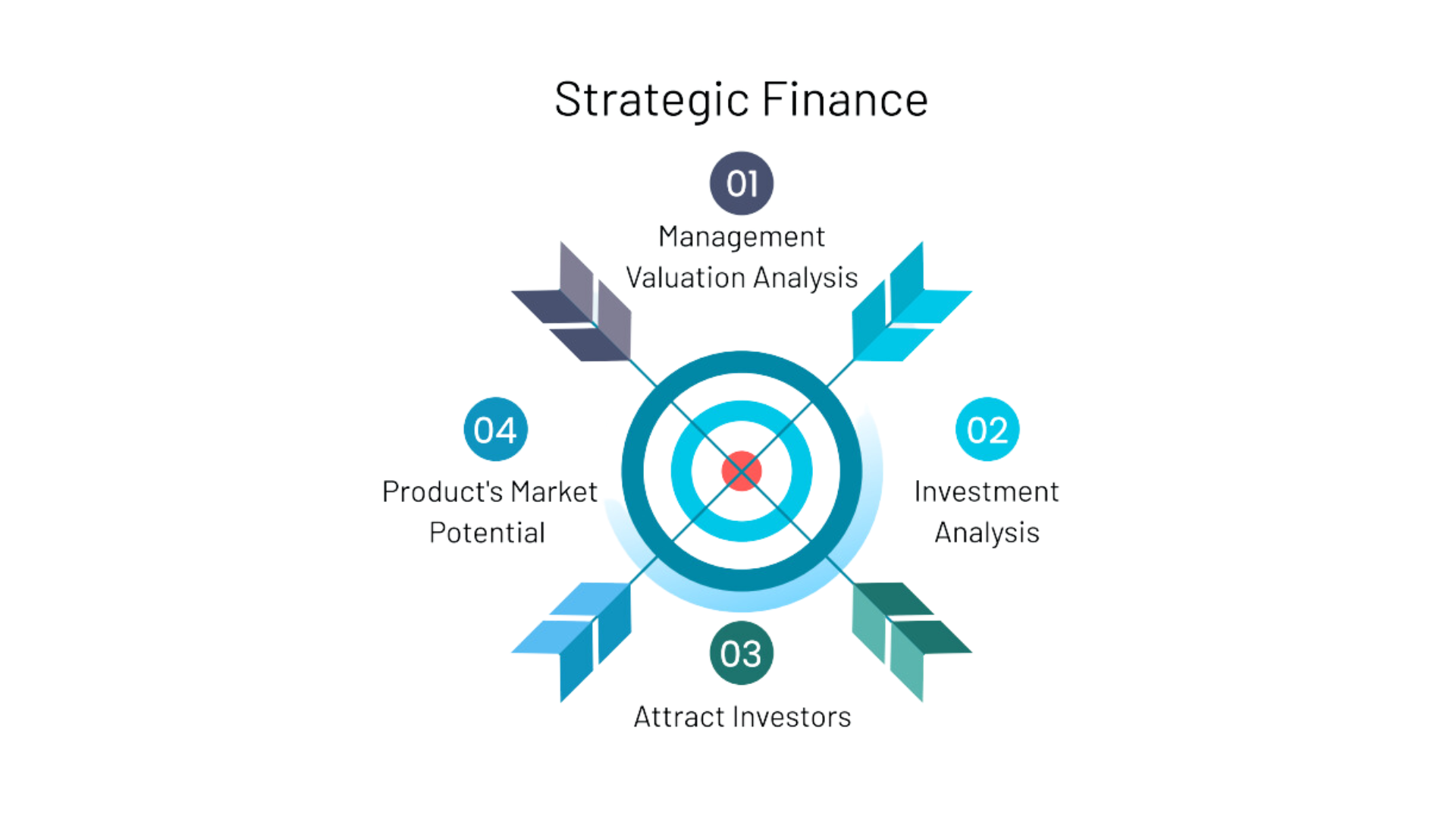
Strategic CFOs can provide insights that can drive positive changes within the organization and create a comprehensive financial plan. They also understand the business’s financial operations, but their objectives are different from the operational CFOs’s. When developing their strategies, there is uniquely distinct CFO responsibility for example a strategic CFO needs to be forward-thinking, while an operational CFO is concerned with past and present financial analysis. Listed below are the tools that every SaaS business must have:1. Know how much your business is worth with Management Valuation Analysis Model
- What is the business worth each year, based on comparable Peer Transaction multiples?
- What does your SaaS business’ valuation look like in different ARR scenarios?
2. Know exactly what investors look for before investing.
- What are the key qualitative narratives (eg:Problem statement, Target Customers, Unique Selling Points, Competitive Advantage, Funding Ask etc.) that you would like to share with Potential Investors?
- What financial and operational trends should be shared with Investors?
- Is your SaaS Metrics scorecard favorable to attract investors?
It is common for startups to struggle with the report they want to present to the investors. They lack the necessary experience to know exactly what the investors look for. Oftentimes in SaaS industry some key qualitative narratives such as competitive advantages, target customers and unique selling points are missed and there is a poor understanding about the important SaaS metrics that the investors favor.
An investor Executive Summary Report of your business needs to be strategic with the financial and operational trends that are to be shared with the investors and accurate- hitting the right notes that investors look for.
3. Test out all the possible scenarios in today’s rapidly changing world
- How is your business likely to perform in Stressed or unforeseen scenarios?
- Will you be able to cover operating expenses in case of delay in raising funds?
- How does different pricing tiers affect your ARR growth?
- What does faster Product Development entail in terms of increasing the team size and time to hit the market?
In today’s rapidly changing world, it is challenging for businesses to plan for tomorrow. And, lack of planning can have its own detrimental effects. To prevent this and to be future-proof, businesses must test out all the possible scenarios and equip themselves with the necessary tools. It starts with understanding your business well, such as understanding how different prices affect your ARR growth, will you be able to cover operating expenses in case of delay in raising funds, what does product development entail in terms of increasing team size and much more. Gaining a perspective on these things, gives you an understanding of how your business is likely to perform in stressed and unforeseen scenarios.
4. Study the market you are targeting to maximize your potential
- What is the estimated size of your market?
- Do you have clarity on your potential TAM, SAM, SOM
Tactical Finance
Tactical financial teams (generally the financial planning & Analysis teams), are not just focused on crunching numbers, but they develop a more holistic understanding of how the organization operates. This helps business leadership get a firmer grasp of what cash flow numbers actually mean because of their in-depth knowledge of your company systems and processes. As someone who knows the business inside and out, CFOs know reasons why your service is performed or how and where your product is made, which provides them valuable insight into the company’s financial health. Listed below are the tools every SaaS business must have:
This is done by knowing your revenue and how subscription and service margins look like. You should also be aware of your cash burn rate, the expected cash runway duration and whether you can manage your short-term requirements with the cash you have. Alongside these, leaders must also look ahead and have a view on when to initiate find-raising discussions. Without reports to measure your performance, you are flying blind and won’t be able to fundamentally understand why variances occur, etc.
It also facilitates communication within and outside the organization, for example- employees within the organization can easily access the required information for the day-to-day operations.
Board members want to see the numbers behind your company’s progress laid bare, and they want to see your framework for improvement. They have the same goals as you—to build a successful business—and they have the expertise and perspective to help. But they can only do that if you give them the right numbers to work with.
The truth is that driving sales growth today requires fundamentally different ways of working. You must first know if your current sales and marketing expenditure gives you optimal ROI in terms of client acquisition and also perform a thorough analysis of your channels from less effective to most effective ones and allocate expenditure accordingly. Along with deciding whether to increase or cut expenditure on sales-led growth, you should also ensure your CAC payback and unit economics are healthy. These are just a few things to keep in mind in order to improve performance. A Sales Channel ROI Analysis Model is to be deployed to understand and gain insights from above discussed factors better.
.png)
1. Ensure the blueprint (Annual Operating Plan) for building your business is accurate and aligns with the greater vision of the business.
An annual operating plan is a prized document – it’s the blueprint for building your organization in any given year. You wouldn’t build a house without architectural drawings. Many SME CEOs run their organizations with only a sketch of what they are building. The process may be generally rushed and multiple perspectives on decision-making is most often missed. These result in ambiguity and undesired outcomes. According to our experts, a financial planning and budgeting model must answer these fundamental questions:- What is your expected revenue growth trend?
- How is your MRR evolving - how much is acquired, churned, upgraded or downgraded each month?
- What is the accurate cost of sales for my SaaS business?
- What is Unit economics (LTV, CAC metrics), Gross margin and Contribution margins?
- What is your expected Product Development expenditure, Sales and Marketing, Administrative and Overheads?
2. Keep your financial model updated to know the deviations from budget.
- What do your actual business transactions translate into Recurring Revenue trends and metrics?
- How does your business’ Actual performance compare with that of Budgeted?
- Are you aware of how your business’s actual performance is when compared to the budget?
3. Know whether your business is trending ahead or behind the plan (Budget) and adjust management decisions accordingly
- What is your Revenue, Subscription and Services margin looking like?
- What is your Cash burn rate and what is the expected Cash Runway duration?
- When should your business initiate fund raising discussions?
- Are you having enough cash to manage your short term requirements?
- How is your business’ actual performance compared to budgeted at the start of the year?
- Why did such variances occur?
This is done by knowing your revenue and how subscription and service margins look like. You should also be aware of your cash burn rate, the expected cash runway duration and whether you can manage your short-term requirements with the cash you have. Alongside these, leaders must also look ahead and have a view on when to initiate find-raising discussions. Without reports to measure your performance, you are flying blind and won’t be able to fundamentally understand why variances occur, etc.
4. Provide decision-makers with accurate information to make effective decisions.
- What explains my current MRR and ARR?
- How much was the new MRR and how much was the expansion MRR?
- What is my average Annual Contract value?
- What is the share of Subscription revenue and Services Revenue?
It also facilitates communication within and outside the organization, for example- employees within the organization can easily access the required information for the day-to-day operations.
5. Give the true picture of your business’s performance to key stakeholders.
- Are you tracking the critical top 10 SaaS KPIs for your business and benchmarking against industry?
- How do your sales and marketing spend and CAC metrics compare with the industry?
- What are the drivers that need to be worked on in order to improve the business’ scorecard?
Board members want to see the numbers behind your company’s progress laid bare, and they want to see your framework for improvement. They have the same goals as you—to build a successful business—and they have the expertise and perspective to help. But they can only do that if you give them the right numbers to work with.
6. Understand the ROI coming from your Sales and Marketing efforts.
- Is your current Sales & Marketing Expenses giving you an Optimal ROI in terms of Client Acquisition.
- Are you overspending on certain channels and under-spending on more effective channels?
- Should you increase the spend on Sales-led growth or reduce?
- Is your CAC Payback and Unit Economics healthy?
The truth is that driving sales growth today requires fundamentally different ways of working. You must first know if your current sales and marketing expenditure gives you optimal ROI in terms of client acquisition and also perform a thorough analysis of your channels from less effective to most effective ones and allocate expenditure accordingly. Along with deciding whether to increase or cut expenditure on sales-led growth, you should also ensure your CAC payback and unit economics are healthy. These are just a few things to keep in mind in order to improve performance. A Sales Channel ROI Analysis Model is to be deployed to understand and gain insights from above discussed factors better.
7. Know the true value of your customers with customer cohort analysis
- How is your customer cohort evolving over a period in terms of the MRR generated?
- How is my Net dollar retention improving for a cohort?
8. Get the list of management priorities right for your executives to make informed decisions.
- What is your business’ financial health indicating?
- What are the actionable insights that can help steer your business for the next quarter?
- What should be the Management Priorities from a Financial Management standpoint?
- What are the best avenues to invest the funds raised to maximize value accretion - Sales and Marketing Channels, Product development etc?
Operational Finance
Operational Finance in SaaS businesses helps leaders get a strong grasp on accounting and financial reporting, operational risk, and other accounting processes.
Recognize SaaS Revenue the right way.
- Is your SaaS recurring revenue recognized appropriately on an accrual basis
- Is accurate Deferred Revenue booked in your balance sheet liability
2. Apply the right accounting principles for a smooth month-end close process.
- Are you tracking your financial transactions closely and applying the right accounting practices
- Are you closing books regularly on a monthly basis to arrive at a financial performance view
3. Get your financial health checkup done with an accurate chart of accounts.
- your Accounting system and Chart of Accounts setup accurately to reflect the accurate picture of your financial performance
- Are you clearly separating Cost of Sales from Operating expenses to calculate right gross profit margin
- Is your Customer Success team’s cost well differentiated between Retention-focussed and Sales-focussed.
Bottom line
The last decade has been the great unbundling of SaaS. What used to be wrapped up under the umbrella of a single big software business has now been split into hundreds of best-in-class point SaaS solutions that SaaS businesses are opting for. In all this, startups are also realizing the increasing need for a robust financial and accounting setup to deal with the periodic demands of their business. Hiring an expert team to manage accounting and financial analysis is the new trend. In this report, we have pointed out the importance of financial and accounting solutions through a list of essentials, needed by any new-age SaaS businesses .